
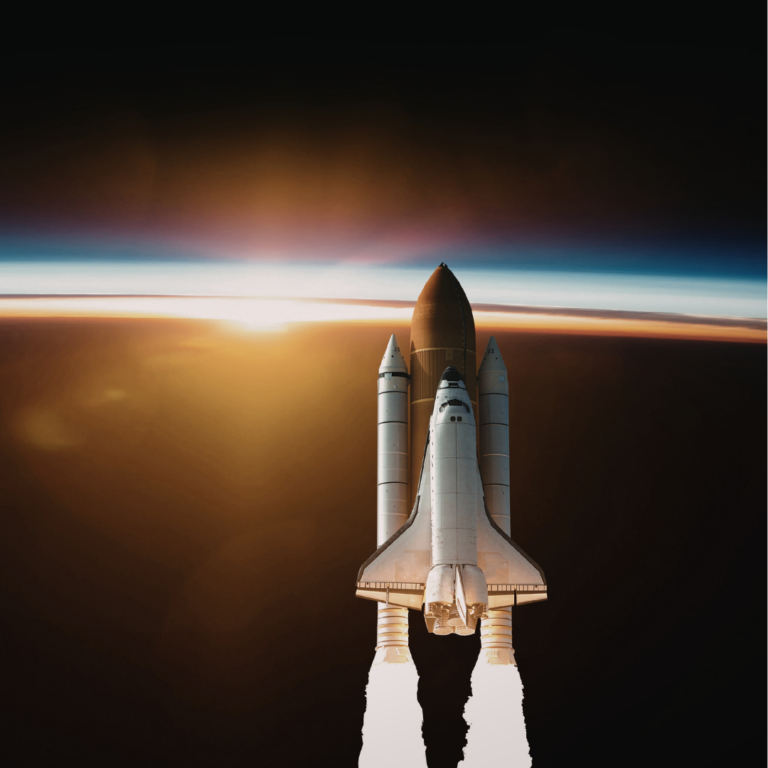
The Artemis program symbolizes humanity’s commitment to exploration and scientific discovery. As the second mission of this awe-inspiring initiative, Artemis II will carry astronauts deeper into the cosmos than humankind has ventured in over 50 years. But how long is this mission expected to last? Let’s dive in and explore this remarkable adventure together!
Before we address the mission duration, it’s essential to understand what the Artemis II mission entails. Planned to launch on November 2024, Artemis II aims to propel astronauts aboard the Orion spacecraft on a flight around the Moon. This will serve as a precursor to the first human landing on Mars, resonating with the spirit of exploration and curiosity that educators like you encourage in your students.
The Artemis II mission is expected to last approximately 10 days. This timeframe is carefully calculated to ensure the safety and well-being of the crew while maximizing the scientific return of the mission.
During this mission, astronauts will experience an orbit around the Moon stretching about 58,000 km (36,000 miles) from the lunar surface, providing fascinating opportunities for research, technology demonstration, and immersive experiences that can inspire children to dream big.
The length of a space mission isn’t merely a logistical consideration. It holds significant implications for the health of astronauts, the technology deployed, and the scientific experiments conducted during the journey. A mission lasting around 10 days is beneficial for testing various aspects of space travel and human capacity to live and work in space.
A Day-by-Day Breakdown of the Mission
While specific day-to-day activities may evolve closer to the launch, let’s outline a hypothetical schedule that showcases the adventure the Artemis II astronauts will embark on.
Day 1: Launch and Ascent
The mission begins with an exciting rocket launch from the Kennedy Space Center in Florida. After a spectacular lift-off, the crew will endure the force of gravity as they ascend into low Earth orbit.
Days 2-3: Initial Orbit and Systems Check
Once in orbit, the crew will carry out initial checks to ensure all systems aboard Orion are functioning perfectly. This phase is critical, as it sets the stage for a smooth journey ahead.
Days 4-5: Lunar Flyby
This vital stage involves the spacecraft traveling toward the Moon, where the crew will witness breathtaking views of our celestial neighbour. Imagine the awe on their faces as they explore the lunar landscape from above!
Day 6: Preparing for Return
On this day, the crew performs critical systems checks to ensure a safe return trajectory back to Earth. The students in your classroom can draw parallels between this vital step and carefully re-evaluating their science projects before presenting them to the class!
Days 7-10: Reentry and Splashdown
As Artemis II concludes, the astronauts will prepare for reentry, igniting the thrill of anticipation as they return home. Finally, they will splash down in the ocean, bringing home knowledge that fuels future missions. Each step can be an enriching topic for lessons, emphasizing teamwork, scientific progression, and exploration.
It’s essential to grasp that Artemis II isn’t simply a mission of length; it encompasses ambitious objectives, including:
Testing Orion’s capabilities: Ensuring that the spacecraft can support human life in the rigorous environment of space.
Gathering scientific data: Important metrics and information that will pave the way for future lunar and Martian expeditions.
Inspiration for future generations: Just like you, the mission aims to spark curiosity and imagination in students, inspiring them to explore science further.
Engaging Your Students with Artemis II
As an educator, you have an exciting opportunity to integrate the concepts surrounding the Artemis II mission into your science curriculum. Your students can learn about:
The physics of rockets and gravity.
Environmental impact and sustainable practices in space exploration.
The importance of teamwork and problem-solving in scientific endeavors.
Utilizing lesson plans and resources about the Artemis missions can help enhance understanding and create engaging classroom discussions!
Students today are tomorrow’s innovators, astronauts, and scientists. By teaching them about the Artemis II mission, you’re not just filling their minds with facts; you’re fueling their imaginations. The triumph of human exploration and scientific advancement demonstrates the remarkable potential within every one of them!
The Artemis II mission will provide crucial insights that will inform not just NASA’s future missions but worldwide attempts at deep space exploration. By successfully circling our Moon, humanity takes a leap towards exploring Mars and beyond! Encouraging your students’ imagination mirrors the very essence of this mission—that the sky is no longer the limit, but just the beginning!
When teaching your students about Artemis II, consider the stories shared by astronauts and scientists involved in the mission. Their tales of adventure ignite passion and evoke laughter. Exploration isn’t just linear travel; it’s about curiosity and the courage to explore the unknown! You might even want to incorporate some hands-on activities to recycle materials into simple rocket models or space-themed arts and crafts, making learning an exhilarating adventure.
In conclusion, the Artemis II mission will last around 10 days, marking a pivotal step in our journey to the stars. This mission serves as an inspiring testament to human ingenuity and the spirit of exploration. Sharing this excitement with your students can lead to essential discussions about space, science, and the importance of saving our environment for future generations.
So, are you ready to prepare your students for an out-of-this-world adventure? Check out the Artemis sessions and discover more in our Learning Zone. Equip yourself with the knowledge and materials to spark curiosity and excitement in your classroom, making this mission a launchpad for a lifelong love of science!
Let’s inspire the next generation of science enthusiasts, one lesson at a time!
Call to Action
Stay tuned for more updates on the Artemis II mission! Inspire your students to dream big, cultivate their curiosity, and perhaps even encourage them to conduct their own classroom experiments with fun, reusable materials. After all, who knows where their imagination might take them!
Visit our Learning Zone for classroom ready content on Artemis II. Happy exploring!
Contacting us is easy, simply complete the form below.
Standard delivery ships in 2-4 working days.
Please allow up to 4 weeks for international orders to arrive (we are working very hard to reduce this time).
FREE on all orders over £25.00;
£3.95 for orders under £25.00;
